Whether you have made money from cryptocurrencies or not, the Indian government wants to tax your trading. Recently, the government of India has issued more than 40,000 Crypto notices across India. Chances are, this trend will continue, and you might also receive a tax notice. Let’s understand the steps to protect yourself.
Why Crypto Reporting Under Strict Scrutiny in India?
The government has confirmed that over 44,000 individuals conducted crypto transactions. In addition to that, they didn’t properly report these transactions in their Income Tax Returns. So, crypto trading is legal in some cases, but concealing crypto trading is not. As a result, this enforcement trend is likely to intensify.
Steps to Protect Yourself in 2026 from Crypto Notices
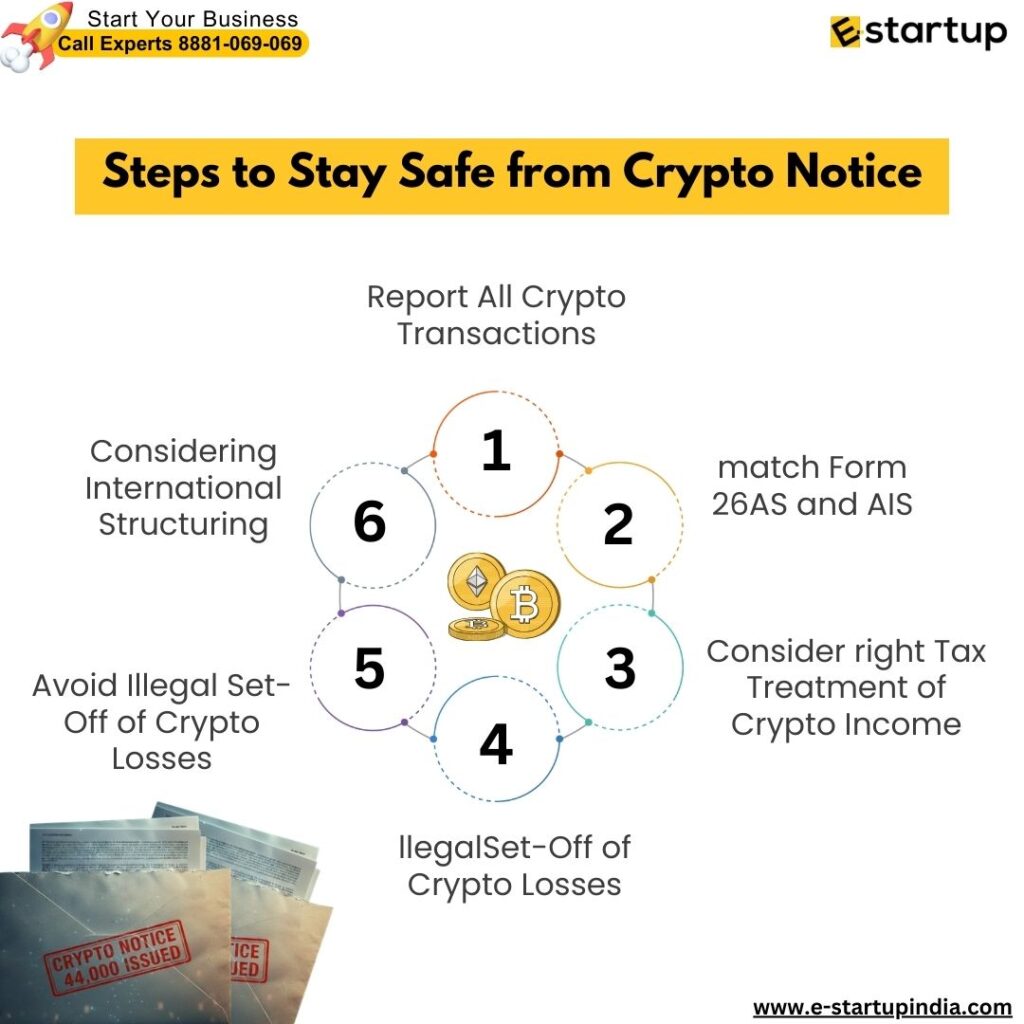
1. Report Crypto Transactions in ITR
You are required to disclose all your crypto transactions in the Virtual Digital Asset (VDA) schedule of your ITR. It does not matter if you just transferred to a friend, or incurred a loss or profit, you must report it.
If you do not disclose these trading details, your chances of getting notices of Income Tax Notice will increase.
2 . Make sure to match Form 26AS and AIS
FIU-registered exchanges deduct 1% TDS on your crypto transactions. This deduction appears in Form 26AS and AIS automatically.
If you claim TDS but do not declare, it will create a mismatch. That mismatch creates an instant crypto notice.
3. Consider the right Tax Treatment of Crypto Income
Under Section 115BBH, crypto income is taxed at a flat 30%. So, it doesn’t matter what income slab you fall into. You have to declare the following in your ITR Filing:
- Salary received in USDT is treated as crypto income, not salary.
- Long-term holdings sold after 2–3 years are not capital gains—they are still crypto income.
Misclassification or applying slab rates instead of 30% can lead directly to a Crypto Notice in 2026.

4. llegalSet-Off of Crypto Losses
Crypto losses cannot be adjusted, and so you must not set them:
- Against any other income head.
- Even against other crypto gains.
If you offset losses to reduce tax liability, you will be treated as a non-compliant taxpayer.
5. Avoid High Trading Volume With Low Declared Income
If your transaction volume is high but your declared income is minimal or shows losses, it will easily raise suspicion with tax authorities. The income tax system then flags these discrepancies between turnover and taxable income. You must avoid this from happening and disclose the transactions in the right manner.
6. Considering International Structuring
Dubai has one of the best crypto trading policies, and India has one of the worst. Therefore, you can think of Dubai Company Registration to avoid the Crypto Notice in 2026, but you have to do it legally and properly.
What To Do If You Receive a Crypto Notice
If you receive a tax notice, do not panic; you can check if you can file a revised return before December 31 of the relevant assessment year. If that’s the case, you are in a good scenario; you can reconcile all transactions and correct errors immediately.
If, unfortunately, revision time has passed, you will now need to respond formally and on time. You must provide detailed:
- Exchange statements
- TDS reconciliation
- Transaction summaries
Conclusion
In conclusion, compliance is not optional in India if you are a crypto trader. If you do not report your trading information correctly, the tax authority will surely send you a Crypto Notices in 2026. So, if you avoid such hassles of dealing with tax notices, you can follow the steps above and also consider Dubai Company Registration.
Moreover, if you want any other guidance relating to ITR & Dubai company registration, please feel free to talk to our business advisors at 8881-069-069.
Download the E-Startup Mobile App and never miss the latest updates relevant to your business.
Get exclusive secret insights, join my community now
https://www.instagram.com/channel/AbZ1PwsJQ4kORhHM/